
Systems That Work: Connection, Communication, and Technology


The year was 2003, and I had my last conversation with my then superintendent in the parking lot of the Ben Hill County Board of Education office. It was spring, and the superintendent had already announced he was leaving, so this would be one of the last conversations we would have. I was a young building-level administrator, and we had developed a mentor-mentee relationship. He was leaving the district to take another superintendent position.
As I look back, I am somewhat embarrassed to share that all that was on my mind as we were saying goodbye was telling him about a book I was currently reading. In Leadership and the New Science: Discovering Order in a Chaotic World, Margaret Wheatley (1999) describes leadership and relationships in reference to quantum physics and how people are connected in ways we don't totally understand, but in ways that affect outcomes in the real world. Her work ignited a curiosity and a desire in me to better understand organizational leadership and how to create a winning culture.
Relationships are built on trust
Relationships are at the core of what educators and schools do. Teaching and learning require a level of trust between all involved for learning to be maximized.
Relationships are built on trust. Trust is built on integrity. Integrity is built on truth. And when goodness guides our relationships, that's worth celebrating.
A wise retired superintendent told me early in my first superintendent role, "Morris, there are no secrets," so always deal in facts and the truth.
Communication is critical to any organization, but because the business of educating children is so relationship dependent, educators must strive to develop and improve systems for communicating with internal and external stakeholders.
Technology does not create a connected school by itself. Leaders create the conditions in which communication systems, instructional practices, safety procedures, and relationships reinforce one another.
Inspecting what we expect
During the fall of 2025 in the Coffee County Schools, we implemented a plan to conduct instructional walkthroughs at each school to provide feedback to principals and reinforce the system's instructional practices and expectations by inspecting what we expect.
As I sat in the office at Nicholls Elementary School debriefing with the principal, assistant principal, academic coach, assistant superintendent, and one or two other instructional leaders, I couldn't help but beam with pride. We had completed our first district walkthrough at Nicholls Elementary School, and I was blown away by the quality instruction observed, as well as the positive climate and culture at the school among staff and students.
As we debriefed, we noted the consistent greetings from classroom student ambassadors who described their classroom social contracts, the tightly sequenced and effective delivery of science of reading strategies by teachers in the early grades, and the higher-order thinking strategies observed in the upper elementary classrooms.
This was a celebratory type of meeting, with discussions of areas noted for improvement, but much more positive than negative. What struck me, however, came toward the end of our morning at Nicholls Elementary School.
When the systems worked together
As we continued the debrief, the principal reminded us that they would be conducting the required state tornado drill around the time we would finish, but not to be alarmed. They had notified all parents directly through the district's parent messaging system that there would be a drill, so everyone was well aware that this was just a drill.
As our meeting concluded, the drill began with an alert coming over my phone and everyone else's in the room from the crisis alert system notifying us of the tornado drill. There was also a prerecorded announcement over the intercom and strobe lights activated that were also part of the crisis alert system. The audible alarm and announcements were transmitted over the recently upgraded audio and video intercom systems installed in all of our schools, along with directions to students projected into the classrooms using the same audiovisual system.
After our meeting as I walked to my truck, I admired the precision with which all of these activities occurred and was impressed with how well our internal systems worked.
I sent the principal, safety director, and assistant superintendent a thank you on the district's staff recognition system praising them for the great work they do to keep all of our students safe. Then I sent a message using the same recognition system to the last couple of teachers whom I had observed, pointing out the positive components of their lessons and thanking them for the job they do.
I started my truck and headed back to the office, still impressed with the systems we have in place to keep our students safe, improve instruction, provide positive feedback for the behaviors we expect, and strengthen relationships in our schools.
Leading in a connected world
What occurred to me is how much, in the past decade, tools that connect everyone have changed the education landscape and provided educators with abilities to connect that we didn't have just a few short years ago. These tools now help create a tightly connected school community. Communication among students, teachers, parents, and stakeholders happens almost instantaneously.
The speed of decision-making and the need to transmit the correct information as quickly as possible have never been greater. Wheatley's (1999) ideas about connections, and the ways we are connected that we don't quite understand, really hit home that morning. The abilities we have through the connected ecosystem we have created is amazing.
These are truly exciting times, but they call on leaders to stay engaged, continue to be lifelong learners and to lead with purpose and integrity. With this ultra-connected world we now live in, coupled with the most recent advancements in AI, leaders must adapt and find ways to leverage available resources to strengthen their organizations.
Systems such as those observed that morning have given school leaders and decision makers the opportunity to create schools that are safer, support higher levels of achievement, operate more efficiently and strengthen relationships. That afternoon, I couldn't help but feel confident about the future. We have come so far in the last ten years while working through COVID, natural disasters, and periods of tremendous social and civil discord. I left work that evening optimistic about the future of our K–12 education system.
References
Wheatley, M. J. (1999). Leadership and the new science: Discovering order in a chaotic world (2nd ed.). Berrett-Koehler Publishers.
About the Author
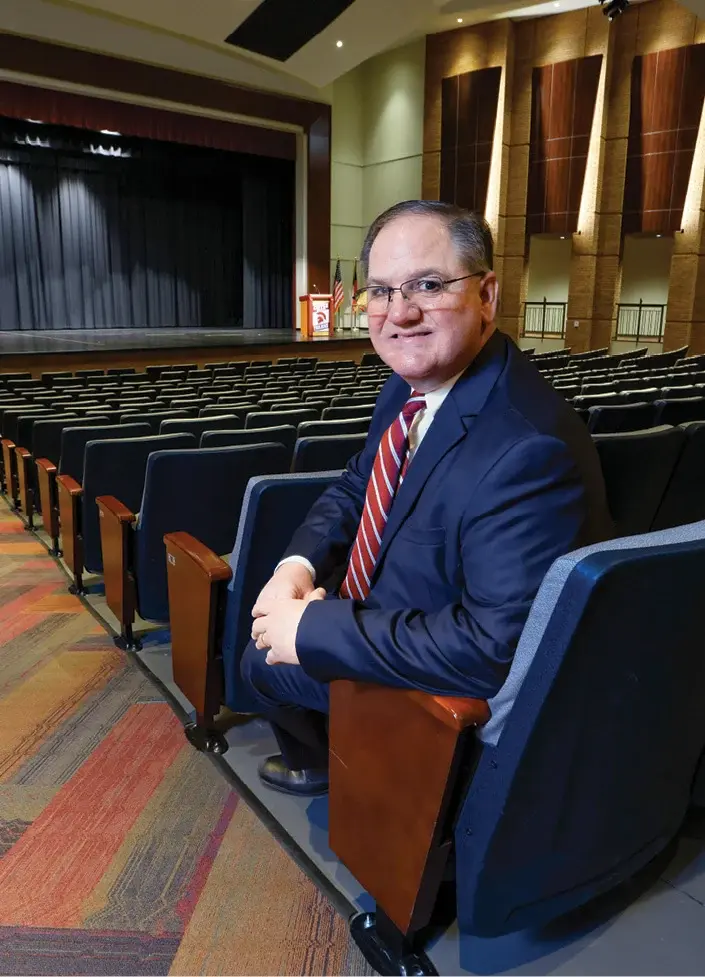
Morris C. Leis, Ed.D., is a retired Georgia superintendent and currently serves as Superintendent in Residence with Hilight. During a career spanning more than three decades in public education, he served as a teacher, coach, principal, and superintendent, most recently leading Coffee County Schools in Douglas, Georgia. His work focuses on educational leadership, school culture, organizational trust, and building systems that support educators and improve outcomes for students.


Comments